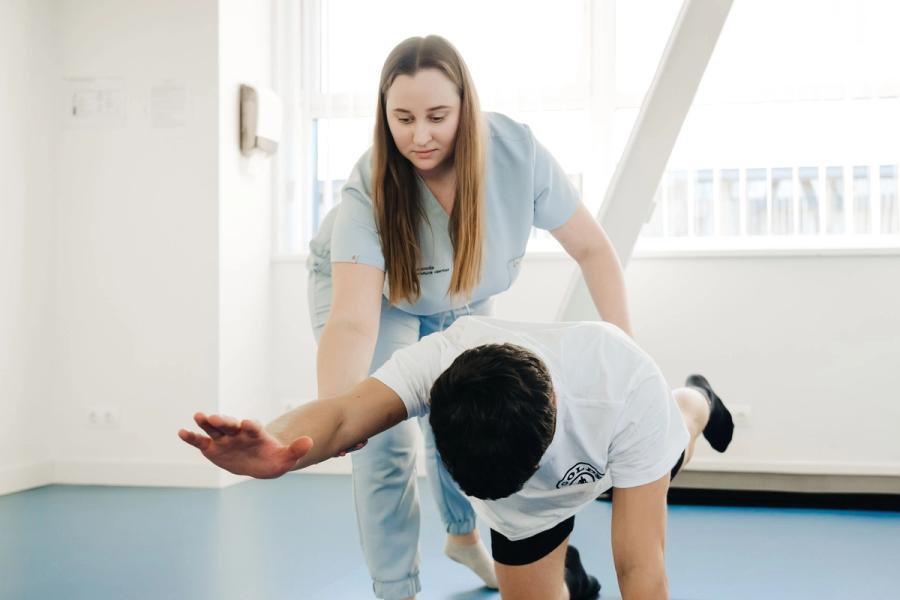
The main difference between seeing a physical therapist and a chiropractor for joint manipulation is usually what comes with the hands-on technique. Physical therapists are trained in joint manipulation and mobilization as part of physical therapy, and they typically use it as one tool inside a broader plan of exercise, movement retraining, and other hands-on care. Chiropractic care often places more emphasis on the adjustment itself, though individual practitioners vary.
Can a physical therapist do spinal manipulation?
Physical therapists are trained in joint manipulation and mobilization as part of physical therapy, including techniques for the spine and for joints such as the hips and shoulders. Joint manipulation is a precise, quick, small-range movement applied to a joint, sometimes described as a high-velocity, low-amplitude thrust. Joint mobilization is its slower, gentler counterpart: controlled, repeated movements within a joint's range.
Many people call a manipulation an "adjustment" or "getting cracked," but physical therapists generally use the term joint manipulation.
Omnia Wellness & Recovery's in-person clinic is in Superior, Wisconsin, and manipulation therapy is one of the services it offers. The clinic describes it as precise, high-velocity techniques intended to restore motion to restricted spinal and peripheral joints, paired with movement retraining to help results last.
Many people expect a "pop." The sound you may hear is generally thought to come from gas bubbles in the joint fluid, not a bone moving back into place. Hearing a pop isn't required for the technique to be useful, and not hearing one doesn't mean anything went wrong.
What's the difference between a physical therapist and a chiropractor?
The main differences between a physical therapist and a chiropractor are their training focus and how central manipulation is to their care. Both professions train at the doctoral level in the U.S., and both work with the spine and other joints. Here is how they tend to compare, keeping in mind that every practitioner works a little differently:
- Training focus: A Doctor of Physical Therapy (DPT) program centers on movement, musculoskeletal and neuromuscular rehabilitation, and exercise prescription. A Doctor of Chiropractic program places substantial emphasis on spinal assessment and adjustment.
- Role of manipulation: For a physical therapist, manipulation is usually one option among many. In many chiropractic practices, the adjustment is the main treatment.
- What else happens in a visit: Physical therapy visits typically include a movement assessment, exercise, and education on how to manage symptoms on your own. Chiropractic visits vary widely; some include exercise and soft-tissue work, others focus mostly on adjustments.
- Length of care: Plans in both professions vary. Physical therapy plans generally aim to build strength and independence so visits taper over time; many chiropractors also set goals and taper visits, while some offer ongoing maintenance care that certain patients prefer.
Neither profession is "better" across the board. Some chiropractors prescribe plenty of exercise, and some physical therapists rarely use manipulation. The right fit depends on what's going on and what you want out of care.
How does a physical therapist use manipulation in a treatment plan?
A physical therapist may use manipulation to help create a window of easier, less painful movement, then use exercise and movement retraining to help you keep that motion. At Omnia Wellness & Recovery, that process happens one-on-one with a Doctor of Physical Therapy.
Assessment first
Your DPT looks at how you move, where you feel symptoms, and what makes them better or worse. Omnia Wellness & Recovery also offers in-clinic diagnostic ultrasound, real-time imaging of muscles, tendons, and joints that can help pinpoint the problem and guide the plan, with no referral or radiation.
Choosing the right hands-on technique
Manipulation isn't always the best choice. Depending on your situation, a DPT may use joint mobilization, soft-tissue work, dry needling, or cupping instead of, or alongside, manipulation. You can see the full range of options on the Omnia Wellness & Recovery services page.
Movement to help it last
Manipulation may reduce stiffness and pain for a while, but the effect is often temporary on its own. Strength, mobility, and movement-control exercises are what many people find helps their improvement last. That's why a physical therapy visit usually ends with something for you to practice at home.
Is joint manipulation safe?
Joint manipulation is generally well tolerated when it's performed by a trained clinician after a careful screening, but it isn't right for everyone. The most common side effect is mild, temporary soreness or stiffness that usually settles within a day or two.
A good clinician screens for reasons to avoid or modify manipulation before using it. These can include recent fractures, significant bone thinning, certain blood vessel or bleeding concerns, and some nerve-related symptoms. If manipulation isn't a good fit, gentler techniques are usually available.
Manipulation is optional; you can always decline it. If you're nervous about it or simply don't like the feeling, tell your physical therapist. There are other ways to work on a stiff joint, and your preference matters.
Should I see a physical therapist or a chiropractor?
A physical therapist may be the better fit if you want manipulation as part of a broader plan that also builds strength, mobility, and the skills to manage your symptoms yourself. A physical therapist might suit you if:
- Your pain keeps coming back and you want to understand why.
- You're recovering from an injury or want to return to a sport, the gym, or a physical job.
- You want a plan that includes exercise and gradually needs fewer visits.
- You'd like hands-on care with other options available, such as dry needling or cupping.
Some people prefer chiropractic care, and some see both kinds of providers. Whoever you see, it's reasonable to ask how they'll measure progress, what you'll do between visits, and roughly how long they expect care to last.
Some symptoms call for prompt medical attention rather than manipulation from any provider. Seek urgent care if back pain comes with loss of bladder or bowel control, numbness in the groin or inner thighs, fever, unexplained weight loss, or a recent significant fall or accident.
Where can I see a DPT for joint manipulation in Superior or Duluth?
Omnia Wellness & Recovery offers manipulation therapy, provided one-on-one by a Doctor of Physical Therapy, at its clinic at 1308 Tower Ave, Superior, WI 54880. The clinic serves Superior and Duluth.
The Omnia Wellness & Recovery team includes Blake Radtke, DPT, a movement specialist with an education in Biokinetics with an emphasis in Bioenergetics, and Emily Holter, DPT, DN, an orthopedic physical therapist with 15 years of experience whose favorite work includes myofascial release, dry needling, and return-to-sport assessments. You can read more about Emily and her approach.
Manipulation itself is hands-on and requires an in-person visit. Omnia Wellness & Recovery's services are also available virtually, so people elsewhere in Minnesota and Wisconsin can still work with a DPT remotely. If you're curious, here's what a virtual PT visit looks like.
For an in-person visit, wear comfortable, loose clothing you can move in, and shorts if a hip or knee is involved. Please give at least 24 hours' notice if you need to cancel or reschedule.
Not sure whether manipulation is right for you? Talk it through with a Doctor of Physical Therapy. Book an appointment with Omnia Wellness & Recovery online, or call (218) 499-0806.
Frequently asked questions
Do physical therapists crack backs?
Physical therapists are trained in joint manipulation, the quick technique people often call "cracking" or an "adjustment," which can sometimes make a popping sound. They usually combine it with exercise and other hands-on techniques rather than using it alone, and it is always optional.
Is a PT manipulation the same as a chiropractic adjustment?
They can look similar from the treatment table, but they come from different professions with different training. A physical therapist typically pairs joint manipulation with movement retraining and a home exercise plan, while chiropractic care often focuses more on the adjustment itself.
Do I have to get manipulated if I see a physical therapist?
No. Manipulation is optional, and you can always decline it. If you'd rather not have it, or it isn't a good fit, your physical therapist can use gentler options such as joint mobilization or soft-tissue work.
Can I get joint manipulation during a virtual visit?
No. Manipulation is hands-on and requires an in-person visit. Omnia Wellness & Recovery also offers virtual visits for people across Minnesota and Wisconsin.
How do I book joint manipulation at Omnia Wellness & Recovery?
Use the online scheduler on the Omnia Wellness & Recovery appointment page: pick a service, choose a time, and tell the clinic a little about you. You can also call (218) 499-0806 or email omniatherapies@gmail.com. The in-person clinic is at 1308 Tower Ave in Superior, WI, and serves Superior and Duluth.