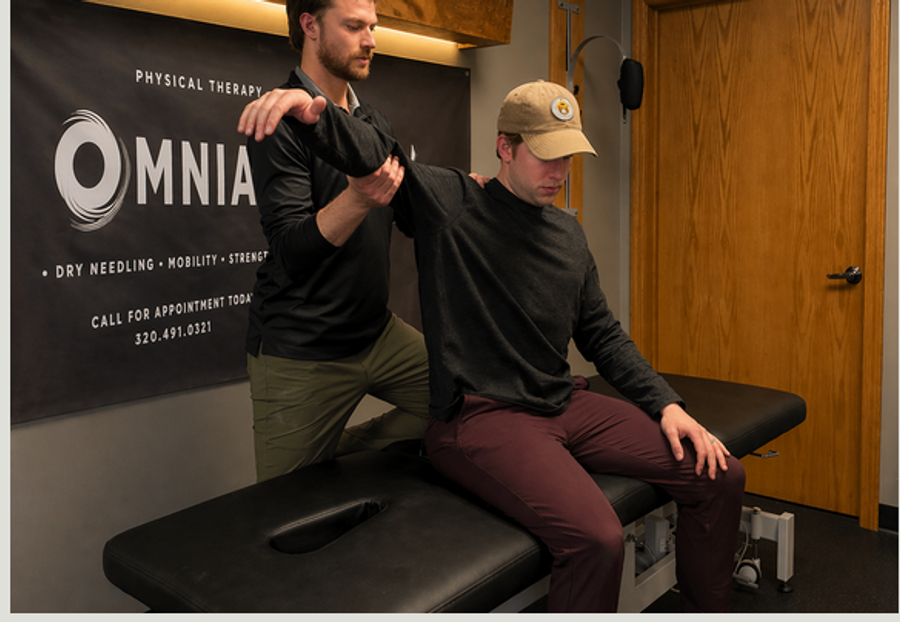
Yes, for many people virtual physical therapy can work well, especially when the care is built around movement assessment, exercise, and education rather than hands-on treatment. A telehealth PT visit is a live, one-on-one video session where a Doctor of Physical Therapy talks through your symptoms, watches you move, and coaches you through a plan you can do at home.
Omnia Wellness & Recovery offers virtual visits to people across Minnesota and Wisconsin, and serves Superior and Duluth in person from its clinic at 1308 Tower Ave, Superior, WI 54880.
Does virtual physical therapy actually work?
Virtual physical therapy can be a helpful option for many people because much of what helps in physical therapy, including guided exercise, movement retraining, and education, does not require being in the same room.
From a physical therapist's perspective, much of the care for many common muscle and joint concerns comes down to the same core pieces whether a visit happens in the clinic or on video: a careful assessment, a well-matched exercise plan, and steady practice between sessions. Results still vary from person to person, and no format guarantees a particular outcome.
What tends to matter most is the quality of the assessment, how well the program fits your goals, and whether you do the work between sessions. A one-on-one video visit with a Doctor of Physical Therapy keeps the focus on you: your history, your movement, and your daily life.
Seeing you at home can also be an advantage. A DPT can watch how you get up from your actual couch, climb your actual stairs, or use the equipment you really have, which can make a program easier to stick with.
What happens during a telehealth PT visit?
A telehealth PT visit is a live video appointment that generally follows the same structure as an in-person evaluation, minus the hands-on treatment. A typical session moves through a few steps:
- Your story. You talk through what's going on: when it started, what makes it better or worse, what you've already tried, and what you want to get back to doing.
- Movement assessment. Your DPT watches you move on camera, such as squatting, bending, reaching, walking, or balancing, often from more than one angle.
- Guided self-tests. You're walked through simple ways to check strength, range of motion, and which movements bring on your symptoms.
- Exercise coaching. You learn exercises in real time, with feedback on form, pacing, and how hard to push.
- A plan. You leave with a home program, a sense of how to progress it, what to watch for, and when to check in next.
Because the visit is one-on-one, there's room to ask questions and adjust the plan to your schedule and space. Blake Radtke, DPT, the lead physical therapist at Omnia Wellness & Recovery, also has an education in Biokinetics with an emphasis in Bioenergetics, so virtual visits can include conversations about nutrition and overall wellbeing alongside exercise and injury prevention.
What problems are a good fit for virtual physical therapy?
Virtual physical therapy may be a good fit when the main tools are exercise, movement coaching, and education. Common examples include:
- Ongoing back, neck, or joint stiffness where building strength and mobility is the main goal
- Starting or progressing a strength or weightlifting program with proper technique
- Flexibility and mobility training
- Injury prevention for runners, lifters, and recreational athletes
- Continuing a home program after starting care in person
- People in greater Minnesota and Wisconsin, or with busy schedules, where driving to a clinic is a barrier
These are general examples, not a diagnosis. A DPT can help you decide whether video care makes sense for your situation, and you can browse the full list of physical therapy services at Omnia Wellness & Recovery to see what's offered.
When is in-person physical therapy the better choice?
In-person physical therapy is usually the better choice when your care calls for hands-on treatment, imaging, or a closer physical exam. Virtual visits also have limits for assessment: a physical therapist can't feel tissue, test joints by hand, or see inside an injury through a camera. Some things simply can't happen through a screen:
- Dry needling with electrical stimulation and cupping, which are done in the clinic
- Manual therapy and manipulation therapy, including joint mobilization and soft-tissue work
- Diagnostic ultrasound, which Omnia Wellness & Recovery offers as real-time, in-clinic imaging of muscles, tendons, and joints
- Situations where a hands-on exam would help clarify what's going on
- Times when moving safely on your own at home is difficult, or when technology gets in the way
A hybrid approach is also an option: an in-person visit at the Superior clinic for hands-on work or imaging, then virtual sessions to keep your home program moving. If you're curious about the hands-on side of care, you can meet Emily Holter, DPT, DN, an orthopedic physical therapist with 15 years of experience whose favorite work includes dry needling, myofascial release, and return-to-sport assessments.
If you have sudden severe pain, spreading numbness or weakness, loss of bladder or bowel control, chest pain, or symptoms after a significant fall or accident, seek urgent medical care rather than booking a physical therapy visit.
How do I prepare for a virtual PT visit?
Preparing for a virtual PT visit mostly comes down to having a steady video connection, room to move, and clothing that lets your physical therapist see how you move. A few minutes of setup makes the session much more useful:
- A device with a camera you can prop up so it shows your whole body, not just your face. A phone on a shelf or a laptop on a chair works.
- Clear floor space a few steps wide, plus a sturdy chair and a nearby wall or counter.
- Comfortable, loose-fitting clothing you can move in. Athletic wear is ideal, and shorts help for knee or hip concerns.
- Whatever equipment you already have, like resistance bands, dumbbells, or a foam roller. You usually don't need to buy anything before your first visit.
- A few notes: when symptoms started, what aggravates them, any imaging reports, and your goals.
- Good lighting and a quiet spot, so your PT can see and hear you clearly.
How do I book a virtual visit with Omnia Wellness & Recovery?
The easiest way to book a virtual visit with Omnia Wellness & Recovery is through the online scheduler, where you pick a service, choose a time that works, and share a little about yourself. You can also call (218) 499-0806 or email omniatherapies@gmail.com.
Omnia Wellness & Recovery serves Superior and Duluth from its clinic at 1308 Tower Ave, Superior, WI 54880, and offers virtual visits across Minnesota and Wisconsin. If plans change, the clinic asks for at least 24 hours' notice to cancel or reschedule, and late cancellations or no-shows may be subject to a fee.
Not sure whether virtual or in-person care is right for you? That's a great first question to bring to a Doctor of Physical Therapy. Book an appointment to talk to a DPT, or contact the clinic if you'd like to ask a question first.
Frequently asked questions
Is virtual physical therapy as effective as in-person?
For many people, virtual PT built around exercise, movement coaching, and education can be a helpful option, though results vary and hands-on treatments such as dry needling, cupping, and manual therapy still require an in-person visit.
Do I need special equipment for a telehealth PT visit?
No. You need a device with a camera, some clear floor space, and comfortable clothing. Your PT can build your program around whatever equipment you already have.
Can I get dry needling or cupping virtually?
No. Dry needling, cupping, manual therapy, manipulation, and diagnostic ultrasound are hands-on and happen at the Omnia Wellness & Recovery clinic at 1308 Tower Ave in Superior, WI.
Who can book a virtual visit with Omnia Wellness & Recovery?
Omnia Wellness & Recovery offers virtual visits to people across Minnesota and Wisconsin. You can book through the online scheduler, call (218) 499-0806, or email omniatherapies@gmail.com.
What if I need to cancel my virtual appointment?
Omnia Wellness & Recovery asks for at least 24 hours' notice to cancel or reschedule. Late cancellations and no-shows may be subject to a fee.