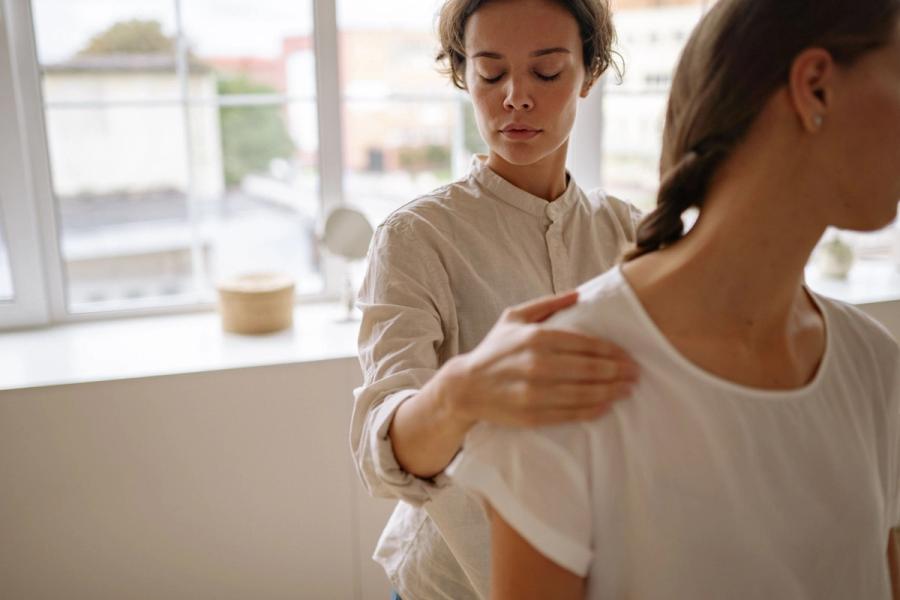
At your first physical therapy appointment, you'll talk through what's bothering you, move through a series of strength and mobility tests, and leave with a plan, often along with a few exercises to start. Wear comfortable, loose-fitting clothes you can move in so the area being treated is easy to reach.
At Omnia Wellness & Recovery in Superior, WI, care is one-on-one with a Doctor of Physical Therapy. Here's a step-by-step look at what the first visit involves, what to wear, and what to bring so you get the most out of it.
What happens at your first physical therapy appointment?
A first physical therapy appointment, often called an initial evaluation, usually has three or four parts: a conversation about your history and goals, a hands-on movement assessment, a plan for what comes next, and often some initial treatment.
- Your story. Your physical therapist asks what's going on, how it started, what makes it better or worse, and what you want to get back to.
- The physical exam. You'll move while the therapist checks strength, range of motion, and how the problem area responds to specific positions or pressure.
- Findings and a plan. Your therapist explains what they found in plain language, how physical therapy may help, and roughly what the next few visits could look like.
- Often, some treatment. Many first visits include a bit of hands-on care or a few starter exercises, if it makes sense for you.
At Omnia Wellness & Recovery, the visit is one-on-one with a Doctor of Physical Therapy, so the person asking the questions is the same person examining you and building your plan. The team includes Blake Radtke, DPT, a movement specialist, and Emily Holter, DPT, DN, an orthopedic physical therapist with 15 years of experience whose favorite clinic work includes myofascial release, dry needling, and return-to-sport assessments. If you'd like to know more about her, you can meet Emily Holter, DPT, DN.
The name reflects the approach: Omnia means "everything" or "all," and the clinic's goal is whole-health care that brings exercise, injury prevention and recovery, and nutrition together.
What will the physical therapist ask me?
Expect your physical therapist to spend a good part of the first visit asking questions, because your history often guides the exam as much as the hands-on testing does.
- When did it start, and was there a specific moment or did it build up gradually?
- Where exactly do you feel it, and does it spread anywhere?
- What makes it better or worse: sitting, stairs, lifting, sleeping, running?
- What have you already tried, and did any of it help?
- Past injuries, surgeries, and relevant health conditions or medications
- Your work, training, and daily routine
- What you want to be able to do again
That last question matters more than people expect. A plan for someone who wants to deadlift again looks different from a plan for someone who wants to garden or keep up with their kids without a sore back. Blake Radtke, DPT, the lead physical therapist at Omnia Wellness & Recovery, also has an education in Biokinetics with an emphasis in Bioenergetics, so the conversation may touch on nutrition and overall wellbeing when they're relevant to your goals.
What does the physical exam involve?
The physical exam at a first PT visit is a series of movement and strength tests, not a workout, and you can always say if something feels like too much.
- Posture and movement: watching how you stand, walk, squat, reach, or bend
- Range of motion: how far your joints move on their own and with assistance
- Strength testing: comparing sides and looking for weak links
- Palpation: feeling muscles, tendons, and joints for tenderness or tension
- Special tests: specific positions that help narrow down which tissue may be involved
- Neurological screening, when relevant: checking sensation, reflexes, or nerve mobility
Omnia Wellness & Recovery also offers in-clinic diagnostic ultrasound, real-time imaging that lets the therapist look at muscles, tendons, and joints to help pinpoint the problem and guide treatment, with no referral or radiation. Whether it's useful depends on your situation, and your therapist can talk with you about whether it might help.
It's normal for some tests to briefly bring on your familiar symptoms. That can be part of how a therapist figures out what's going on, and you can always ask them to stop or explain what a test is for.
Will I get treatment at my first physical therapy visit?
Many people do get some treatment at their first physical therapy visit, though the evaluation comes first and the amount of hands-on care varies from person to person.
In physical therapy generally, a first session often ends with a few targeted exercises to try at home and a plain-language explanation of what may be contributing to your symptoms. At Omnia Wellness & Recovery, early care may draw on services such as:
- Manual therapy: hands-on techniques such as joint mobilization and soft-tissue work, tailored to your needs
- Strength training: a program built around your goals, with proper technique and safe progression
- Flexibility and mobility: targeted work on range of motion and movement quality
Other services, such as dry needling with electrical stimulation, cupping, or manipulation therapy, may become part of your plan when they're a good fit. Feel free to ask what any technique involves, and to say no to anything you're not comfortable with. You can see the full list on the Omnia Wellness & Recovery services page.
One session is rarely the whole story for a long-standing problem; the first visit sets a baseline so progress can be measured over the following weeks. Some people feel a little sore afterward, especially after new exercises or hands-on work; see the FAQ below for what's typical.
What should I wear to physical therapy?
Wear comfortable, loose-fitting clothing to physical therapy, ideally athletic wear, and choose pieces that make the area being treated easy to reach.
- Knee, hip, ankle, or foot: shorts, or loose pants that roll up above the knee
- Shoulder, neck, or upper back: a tank top, sports bra, or loose T-shirt
- Low back: athletic shorts or joggers with an elastic waist
- Shoes: supportive athletic shoes, especially if walking, running, or lifting is part of your goals
Jeans, dresses, stiff work clothes, and bulky jewelry make movement testing and hands-on care harder. If you're coming straight from work, bring a change of clothes.
What should I bring to my first physical therapy appointment?
Bring anything that helps your physical therapist understand your history: notes on your symptoms, a list of medications, and any relevant imaging reports or notes from other providers.
- A list of current medications and supplements
- Imaging reports (X-ray, MRI) or notes from other providers, if you have them
- Notes on when symptoms started and what makes them better or worse
- A short list of goals and questions
- The shoes you usually train or work in, if they might be relevant
- A water bottle
Omnia Wellness & Recovery asks for at least 24 hours' notice to cancel or reschedule, and late cancellations and no-shows may be subject to a fee.
If getting to Superior isn't practical, Omnia Wellness & Recovery offers virtual visits across Minnesota and Wisconsin. Much of a first visit, like the conversation and the movement assessment, can carry over to video; here's what a telehealth PT visit looks like.
How do I book my first visit at Omnia Wellness & Recovery?
The easiest way to book a first visit with Omnia Wellness & Recovery is the online scheduler, where you pick a service, choose a time that works, and share a little about yourself.
You can also call (218) 499-0806 or email omniatherapies@gmail.com. The clinic is at 1308 Tower Ave, Superior, WI 54880, serving Superior and Duluth in person, with virtual visits across MN and WI.
Not sure whether physical therapy is right for what you're dealing with? Talk to a DPT at Omnia Wellness & Recovery and bring your questions to your first visit.
Frequently asked questions
How long is a first physical therapy appointment?
It varies by clinic, but initial evaluations are often longer than follow-up visits because they include your history and a full assessment. You can see appointment options in the Omnia Wellness & Recovery online scheduler, or call (218) 499-0806 to ask how much time to plan for.
Is it normal to be sore after my first PT session?
Mild soreness that settles within a day or two is common after new exercises or hands-on work. Let your physical therapist know if your symptoms get noticeably worse.
Can my first physical therapy visit be virtual?
Yes. Omnia Wellness & Recovery offers virtual visits for people across Minnesota and Wisconsin, in addition to in-person care in Superior and Duluth.
Do I need imaging before my first PT visit?
Not necessarily. If you already have X-ray or MRI reports, bring them. Omnia Wellness & Recovery also offers in-clinic diagnostic ultrasound, with no referral or radiation, when it may help guide treatment.